
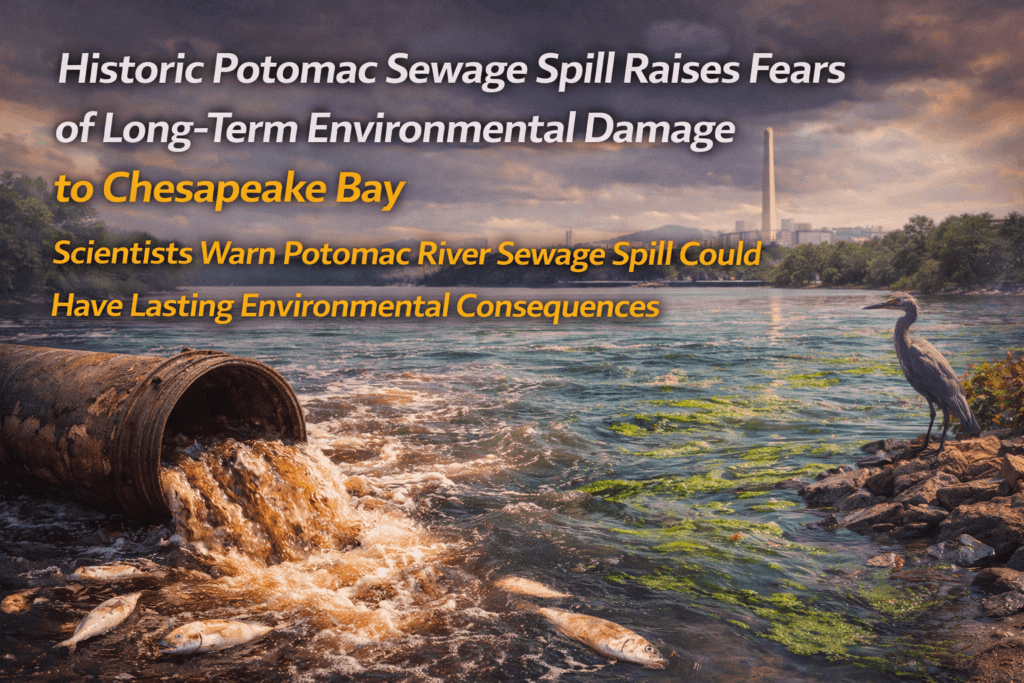
Scientists Warn Potomac River Sewage Spill Could Have Lasting Environmental Consequences
A massive sewage spill along the Potomac River is raising serious environmental concerns, with scientists warning that the impact could stretch far beyond the initial site — potentially affecting ecosystems all the way to the Chesapeake Bay.
Over 200 Million Gallons of Raw Sewage Released
In January, a decades-old sewer line collapsed near the Potomac River in Maryland, close to Washington, D.C. Over several days, more than 200 million gallons of untreated sewage flowed into the river before emergency measures were put in place.
DC Water, the utility responsible for the pipeline, has since installed pumps and constructed a steel bulkhead to redirect wastewater around the damaged section. While officials say the region’s drinking water remains safe, environmental experts caution that the ecological damage may be significant and long-lasting.
Toxic Mix Threatens Aquatic Life
Raw sewage contains far more than organic waste. According to clean water advocates, it carries bacteria, pharmaceuticals, household chemicals, and other pollutants that can settle into river sediment. These contaminants may disrupt fish reproduction, harm bird populations, kill aquatic insects, and pollute surrounding soil.
Environmental groups describe the spill as one of the largest sewage overflows in U.S. history — and a stark reminder of the nation’s aging infrastructure crisis.
Aging Infrastructure and Climate Change Collide
Experts say sewer system failures are becoming more common nationwide. Many systems, especially those that combine stormwater and wastewater, struggle to handle heavy rainfall. Population growth has added further strain on infrastructure built decades ago.
Climate change is compounding the issue. Warmer temperatures contribute to more intense rainstorms that overwhelm sewer systems in short periods of time. Scientists warn that these increasingly severe weather events will likely make such incidents more frequent in the future.
Rising Temperatures Could Worsen Impact
While bacteria like E. coli have already been detected at elevated levels near the spill site, colder winter temperatures have limited immediate biological growth. However, as summer approaches, experts fear warmer water could fuel harmful algae blooms. These blooms can deplete oxygen levels, leading to fish kills and broader ecosystem damage.
Environmental advocates are also concerned about long-term effects on waterfront communities, recreational users, and tourism. Once raw sewage enters a river system, it cannot be removed — and much of it will eventually flow downstream into the Chesapeake Bay and out to the Atlantic Ocean.
Chesapeake Bay Restoration Efforts at Risk
The Potomac River is a major tributary of the Chesapeake Bay, which spans 200 miles along the mid-Atlantic coast between Maryland and Virginia. Scientists and policymakers have spent decades working to reduce pollution and restore the bay’s fragile ecosystem.
This spill, experts say, represents a setback for those long-standing cleanup efforts.
Federal Response and Political Debate
Washington, D.C. Mayor Muriel Bowser has requested federal disaster assistance, including reimbursement for DC Water’s response costs. The Environmental Protection Agency (EPA) has stated that it is coordinating with local partners to support the response.
Meanwhile, political debate has emerged over responsibility for the failure. DC Water operates under federal oversight, and discussions continue regarding long-term accountability and infrastructure funding.
The Bigger Issue: America’s Underground Infrastructure
Utility leaders emphasize that this incident highlights a broader national problem: much of the country’s wastewater infrastructure was built in the mid-20th century, long before current environmental standards, population demands, and climate pressures.
Environmental scientists argue that meaningful investment in modernizing sewer systems is urgently needed. While infrastructure funding often focuses on roads and bridges, experts stress that underground water systems are equally critical to public health and environmental protection.
Without substantial upgrades, similar disasters may become more common — putting rivers, bays, and coastal ecosystems at continued risk.