
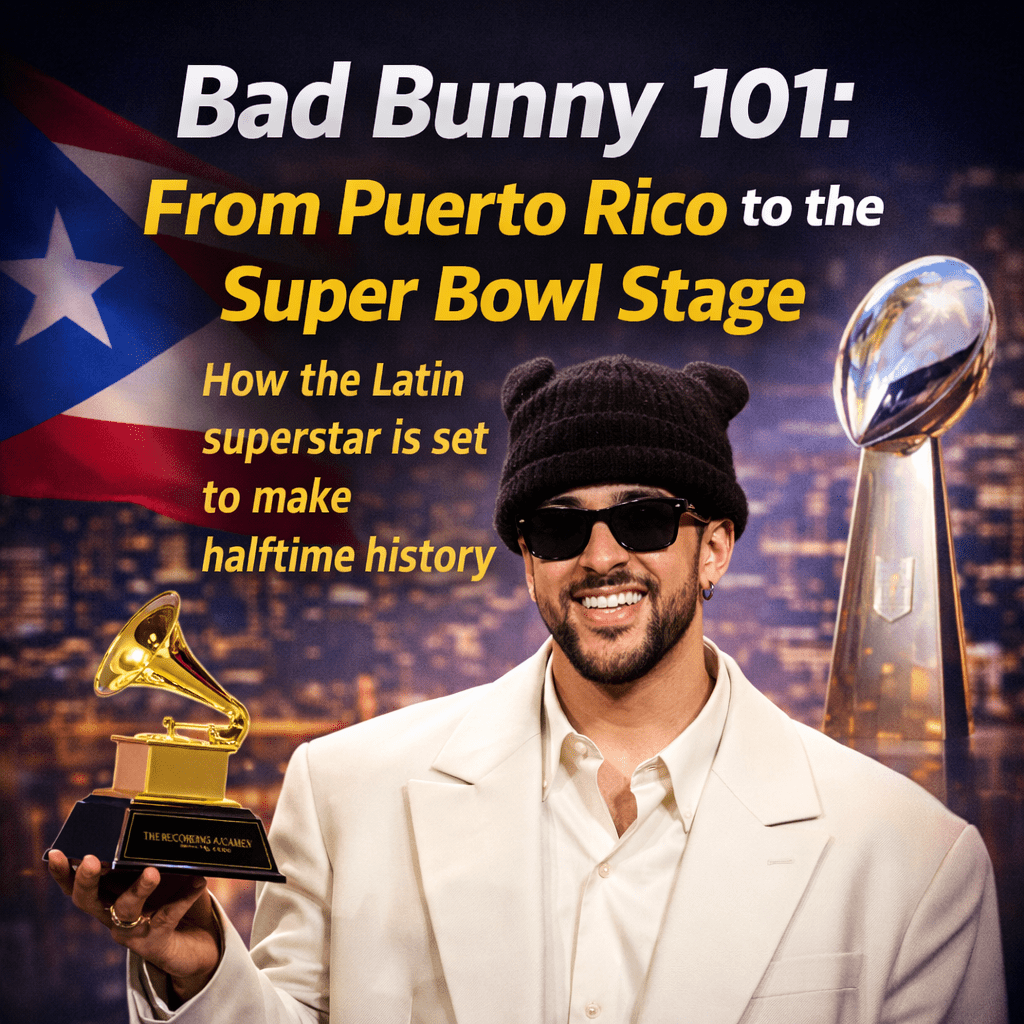
Bad Bunny 101: Everything You Need to Know Before His Historic Super Bowl Halftime Show
When Bad Bunny stepped onto the “Saturday Night Live” stage as host last October, he had a playful message for viewers ahead of his upcoming Super Bowl halftime performance.
“If you didn’t understand what I just said,” he joked after addressing fans in Spanish, “you have four months to learn.”
Whether audiences took that challenge seriously or not, one thing is certain: the Puerto Rican superstar is set to deliver one of the most talked-about halftime shows in Super Bowl history. Fans online have already dubbed the event “Benitobowl,” a sign of just how much anticipation surrounds his performance.
When Bad Bunny takes the field at Super Bowl 60, he will become the first solo Latin artist performing primarily in Spanish to headline the halftime show — a landmark moment not only for him, but for Latin music worldwide.
From Small-Town Roots to Global Stardom
Born Benito Antonio Martínez Ocasio, Bad Bunny’s journey began far from sold-out stadiums and global charts. He grew up in Vega Baja, Puerto Rico, and while working as a grocery bagger, he started uploading music to SoundCloud. Those early tracks quickly gained traction, drawing millions of listeners and catching the attention of the Latin music industry.
As his popularity grew, Bad Bunny collaborated with major artists across genres, including Marc Anthony, Jennifer López, and Cardi B. By 2018, he was already among the world’s most-streamed artists — even before releasing his debut album, X 100PRE, on Christmas Eve that year.
Breaking Records and Redefining Reggaeton
Fast forward to today, and Bad Bunny stands as one of the most influential artists of his generation. With six studio albums and six Grammy Awards, he has played a major role in bringing reggaeton and Latin urban music to a global audience.
His achievements are historic:
The most-streamed artist on Spotify worldwide from 2020 to 2022, and again in 2025
The first artist to take an all-Spanish-language album to No. 1 on the Billboard 200
The highest-grossing concert tour in a single year, earning over $435 million
A groundbreaking 31-show residency in Puerto Rico, celebrating his roots and culture
His success has helped transform reggaeton from a once-underground genre into a dominant global force.
Music Shaped by Culture and Resistance
Beyond chart success, Bad Bunny’s music reflects the social and political realities of Puerto Rico. His lyrics often reference economic struggles, the aftermath of Hurricane Maria, public protests, and the island’s evolving identity.
Cultural scholars note that his appeal lies in this balance — he addresses hardship and resistance while also celebrating joy, community, and everyday life. That authenticity has made him a voice for millions, particularly younger audiences across Latin America and the United States.
Understanding Bad Bunny’s Lyrics
For listeners unfamiliar with Puerto Rican slang or Spanish phrases commonly used in his music, understanding some key expressions can enhance the Super Bowl experience.
Bad Bunny often blends humor, nostalgia, and emotion into his lyrics — whether he’s hyping up a crowd, celebrating unforgettable moments, or reflecting on loss. Songs from his latest album, DeBÍ TiRAR MáS FOToS, have gone viral for their emotional depth, with fans using them to honor loved ones and share personal memories online.
A Halftime Show That Makes History
Bad Bunny’s Super Bowl halftime appearance is more than just a performance — it’s a cultural milestone. It represents the growing influence of Latin music on the global stage and marks a moment where Spanish-language artists are no longer niche but central to mainstream pop culture.
As millions tune in, one thing is clear: Bad Bunny’s journey from a small town in Puerto Rico to the world’s biggest stage is a story of talent, resilience, and cultural pride.